Kecak and fire dance by Tanah Lot
A reserved seat at the hour-long open-air show, with options that add transfer, the temple's ticket, a temple tour or Taman Ayun. The seat-only option leaves out the temple ticket.
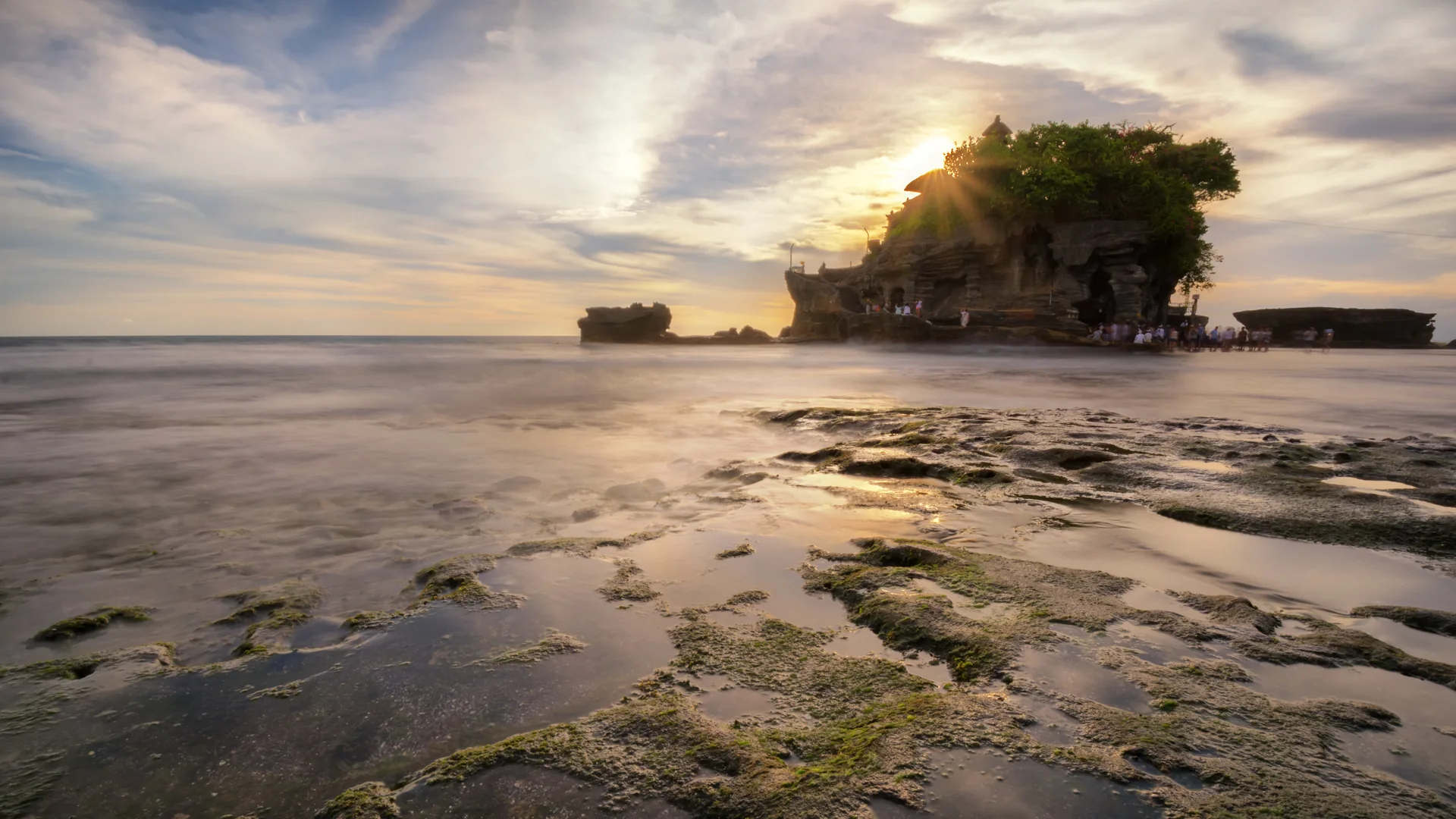
Tanah Lot · Bali
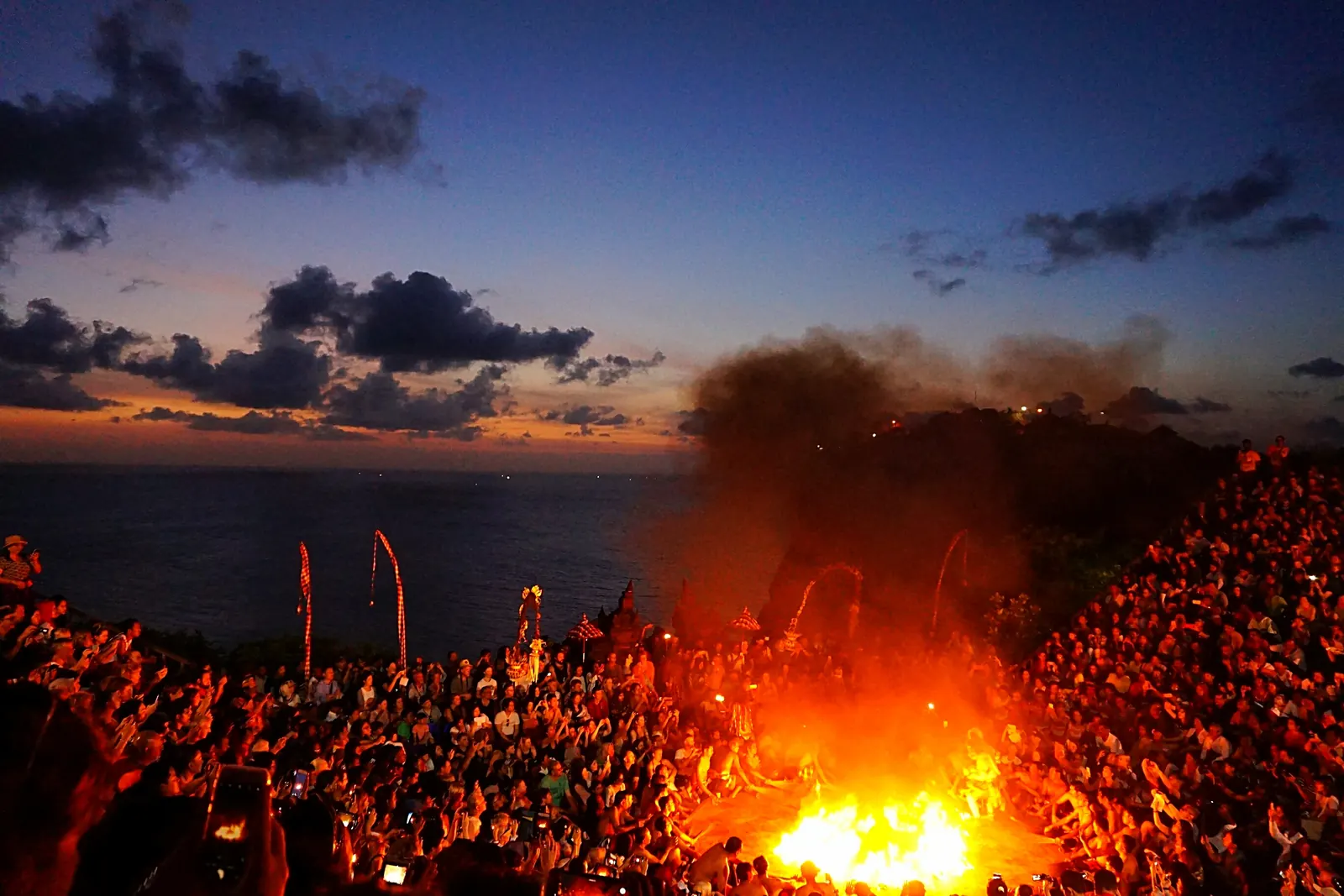
A chanting circle and a fire dance stage Ramayana scenes on an open-air stage by Bali's sea temple.
Seats are reserved and limited, and the show is timed for sunset, so check in early.
The first thing to settle
In short. Worth it if you want dusk on the sea-temple coast and a chanted Ramayana drama in one evening, and you can accept an open-air stage where rain is the recurring complaint. The cheapest ticket is a reserved seat at the show and nothing more. It leaves out the temple's own entry ticket, which you buy separately, and it brings no transfer, no temple tour and no second temple.
A kecak and fire dance on an outdoor stage in the temple area, about 100 metres from Tanah Lot, running about an hour and timed for sunset. Performers sit in a circle chanting cak while Ramayana scenes are danced in the middle, with fire worked into the drama. Your seat is reserved, and you check in at least 15 minutes before the start.
It is not a temple rite. English Wikipedia dates kecak as a popular form to the 1930s, when it was reshaped as a Ramayana drama for visiting audiences, so this is a performance beside a sacred site. It is not a visit to the temple rock either. And nobody can sell you the sunset: cloud and rain decide that on the day.
The ticket ladder
The show seat is the one fixed part. Everything else depends on the option you choose on the booking screen, so read that line before you confirm.
In every ticket
A seat at the kecak and fire dance. Show your ticket at the stage by the temple.
Left out of the seat-only option
Not on the seat-only option. Unless your option includes it, you buy the temple's own ticket separately.
Only on some options
Transfer is included on some options, and the itinerary shows the drive back ending in Kuta. Check that your area is covered before you pay.
Only on some options
A guided visit to Tanah Lot before the show comes on some options.
Only on some options
Some options add this moated temple in Mengwi with its entry ticket, which is why the outing runs anywhere from one hour to five.
Only on some options
An optional audio guide is offered in Japanese and French.
Worth noting
A reseller, Bali Performances, supplies this ticket on GetYourGuide.
Worth noting
Not suitable for babies under one, and an adult must stay with children throughout.
Worth noting
No fee if you cancel 24 hours ahead or earlier, and payment can wait until nearer the evening.
Behind the chant
Six threads run through the form, as English Wikipedia's articles on kecak, sanghyang, Hanuman and Sita describe them. They explain the form in general. They are not the running order of the stage at Tanah Lot.
The root
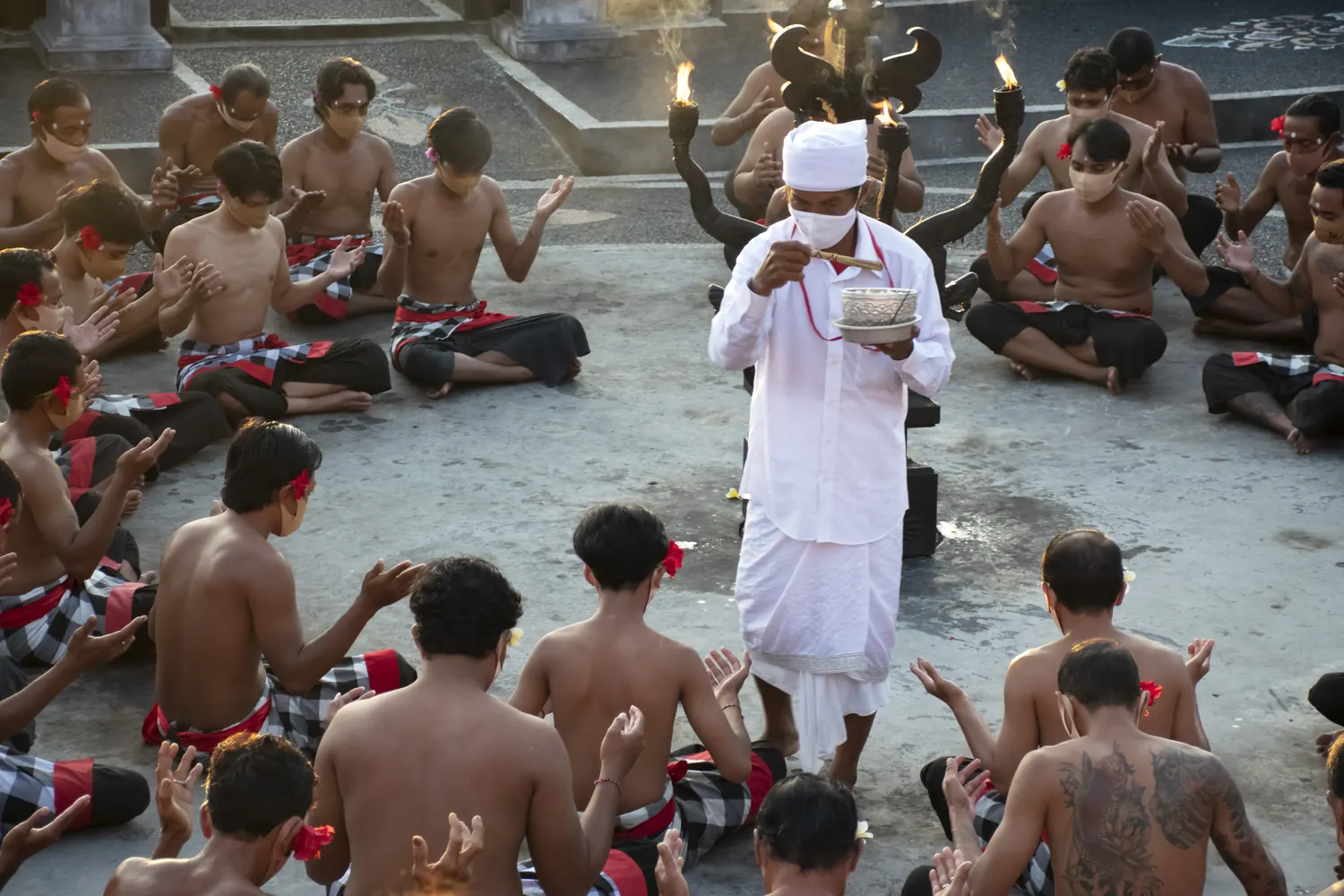
Sanghyang rests on the idea that an unseen force, the hyang, enters the body of an entranced performer. Wikipedia treats these as sacred dances held only at religious ceremonies, and says kecak has its roots there: first a trance ritual with a male chorus, long before any ticket was sold.
The 1930s
The German painter and musician Walter Spies is credited with adapting the ritual into a Ramayana drama for Western audiences, working with the dancer Wayan Limbak, whose touring groups made it known abroad. The scholar I Wayan Dibia argues that Balinese artists were already changing the form before Spies arrived.
The voices
Dozens of men sit in concentric rings around a coconut oil lamp, swaying and chanting chak, the sound written cak on your ticket. One keeps the beat with po-po-po, one calls the starts and stops, one sings above the chorus, and a narrator called the dalang tells the story.
The story
The drama usually begins in the forest of exile. A golden deer draws Rama and his brother away, Ravana carries off Sita, and the vulture Jatayu fights him and loses. Meanwhile the chanters change sides with the plot, standing in for Rama's ape army and for Ravana's demons.
The hero
Hanuman leads the Vanaras, the monkey-like allies who help Rama, and he is the one who finds Sita. In a common telling of the epic he is caught in Lanka, Ravana has his tail set alight, and he breaks free and runs across the rooftops setting the city ablaze.
The fire
Wikipedia links the fire to that burning of Hanuman: in some performances the dancer is blessed by a priest, enters a trance and kicks through the fire. Treat that as a description of the tradition, and expect flames on this stage only as the fire dance your ticket names.
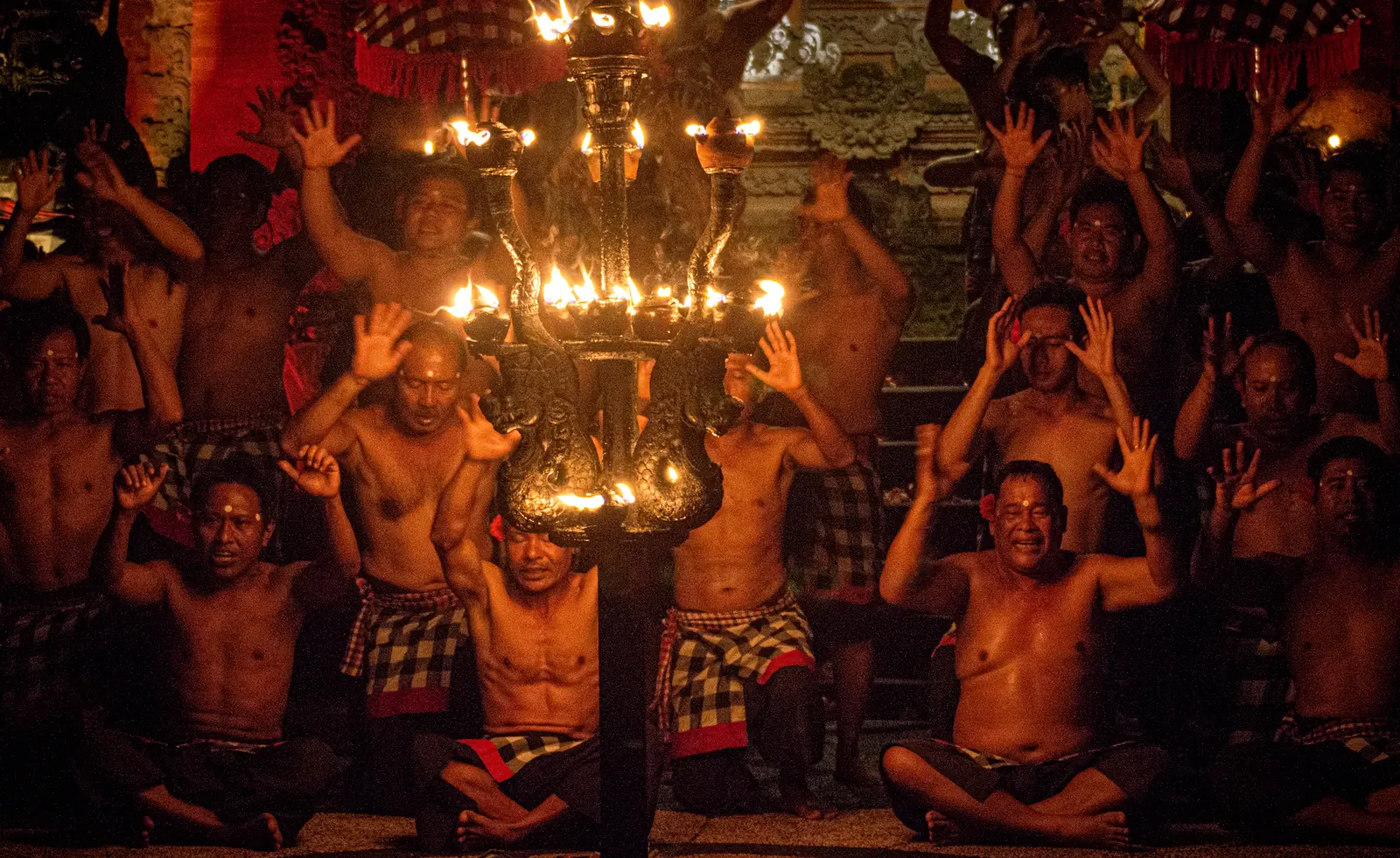
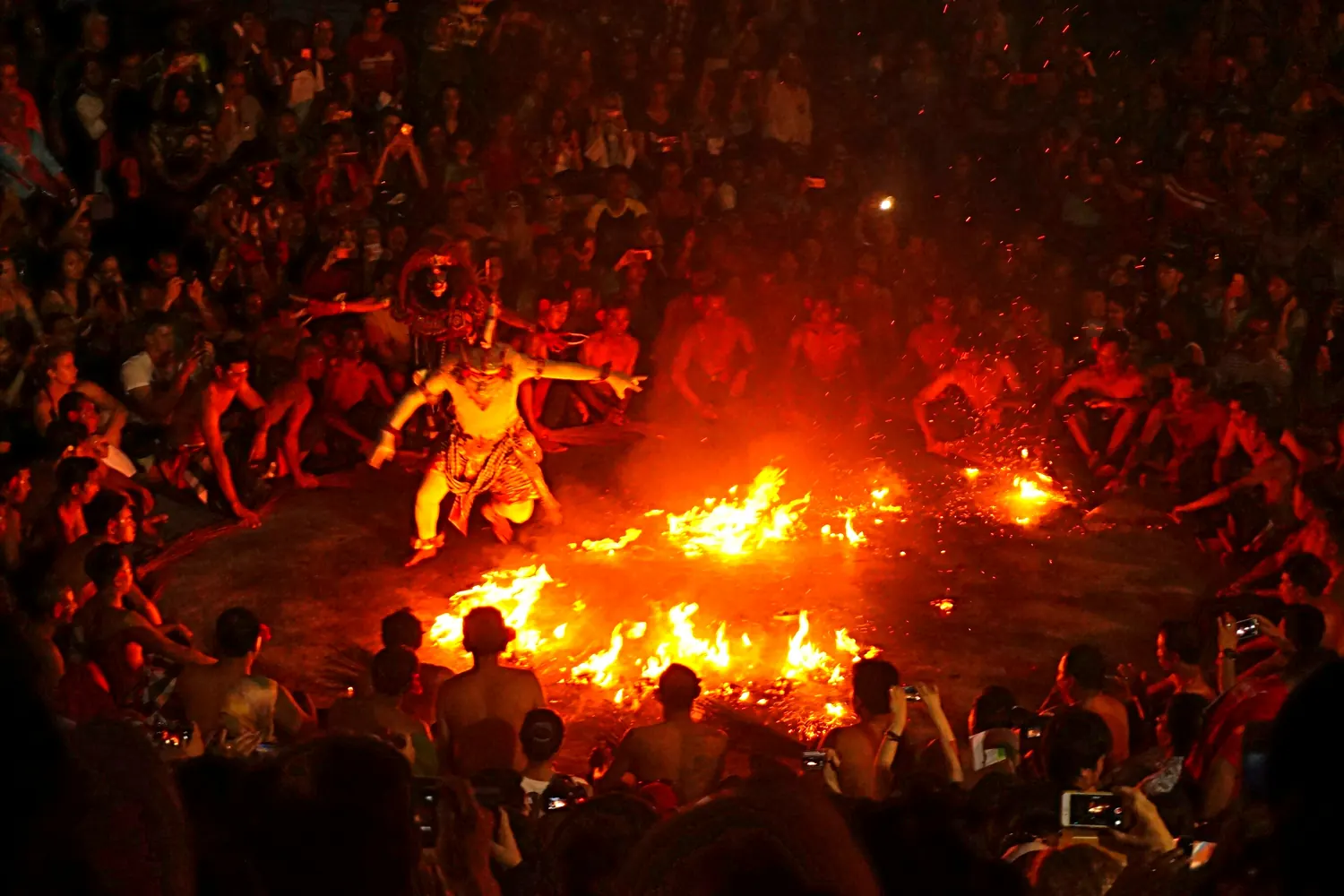
Scenes, their order and the handling of fire are the company's choice on the night. Your ticket covers a kecak and fire dance with Ramayana scenes, not any particular episode.
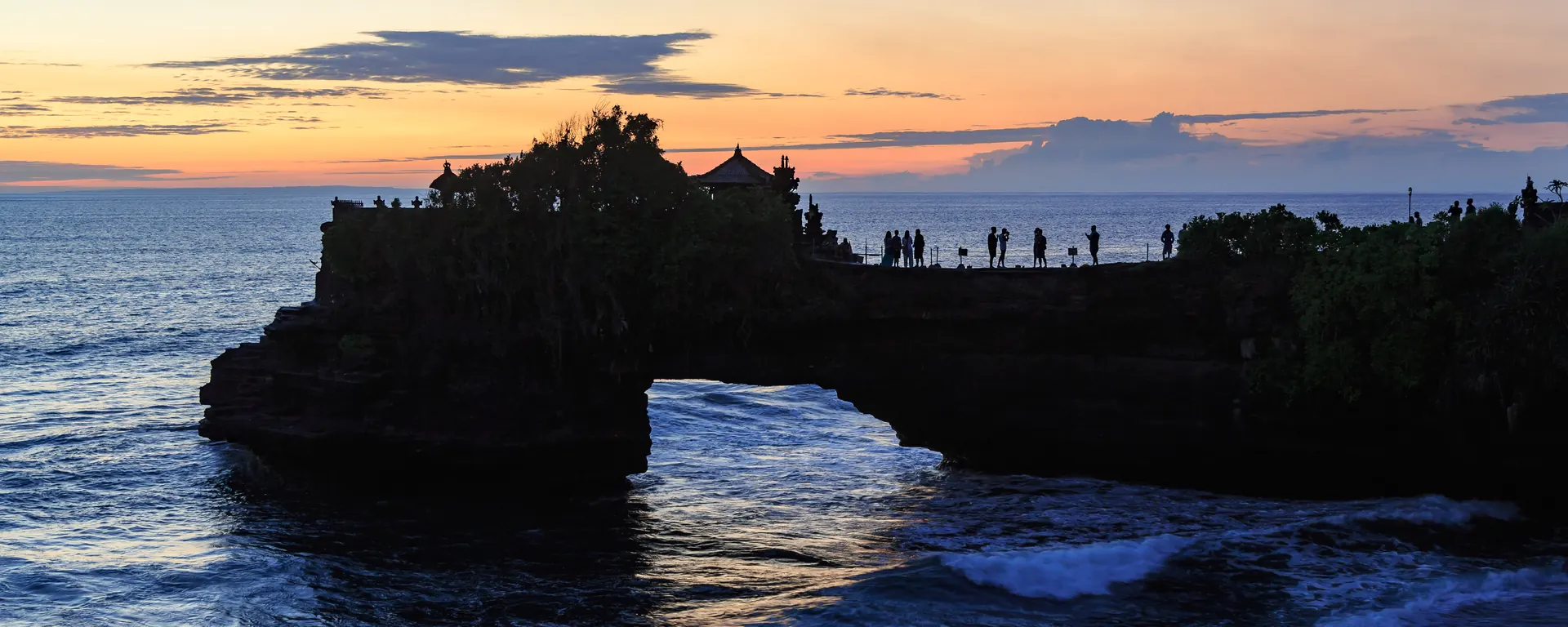
Dusk or dawn
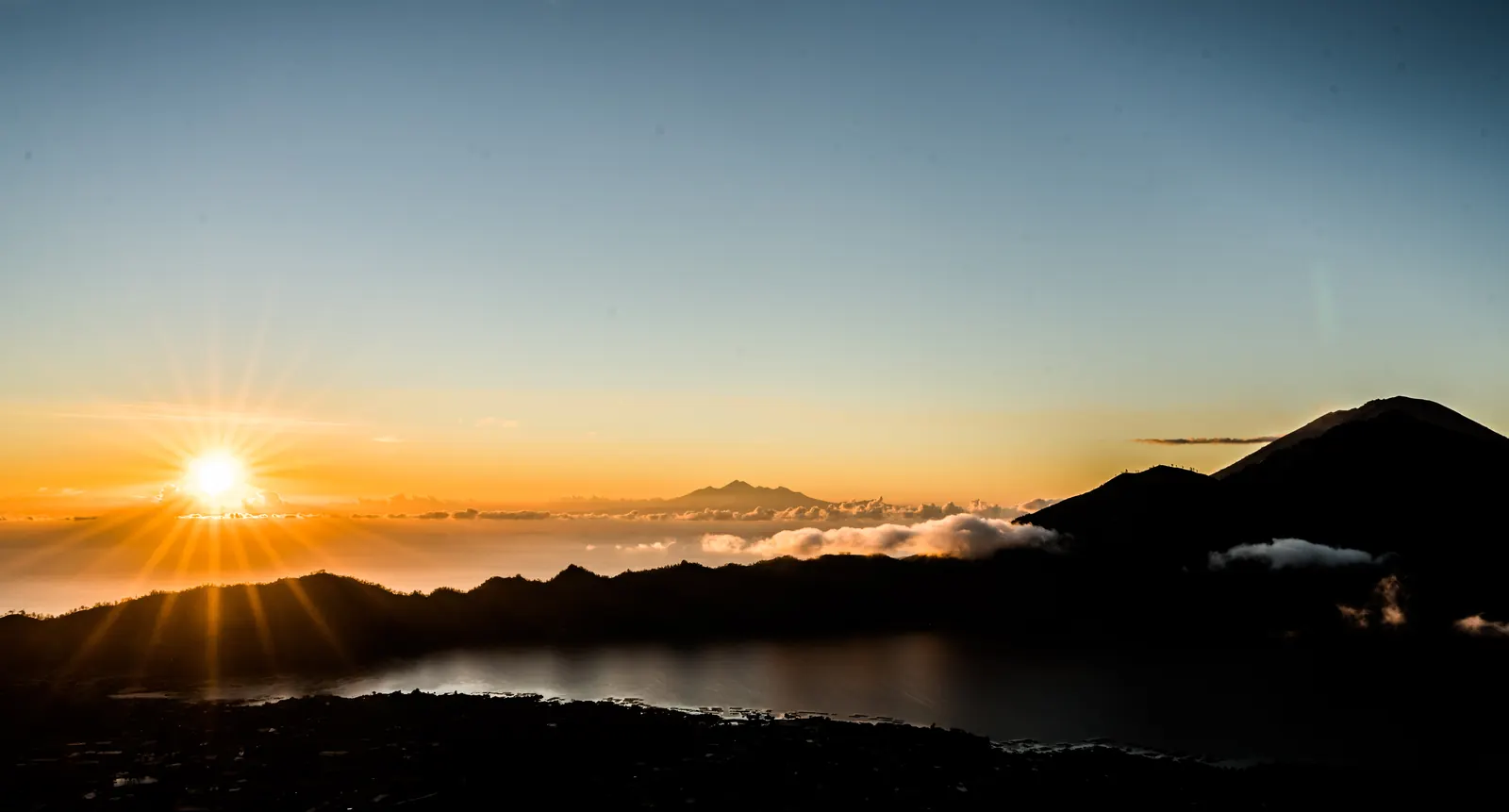
The show first, then the rest of Bali
The Tanah Lot seat leads. Beside it sit the volcano hike it is weighed against further up, a morning on the Ayung River, and a long day around Ubud.
A reserved seat at the hour-long open-air show, with options that add transfer, the temple's ticket, a temple tour or Taman Ayun. The seat-only option leaves out the temple ticket.
A guided early-morning hike to the summit of an active volcano, with a simple breakfast at the top and views over Lake Batur. Steep and vigorous; moderate fitness is recommended, and it is not for anyone with heart or back trouble.
Class 2 rapids that can rise to class 4 in the rainy season, stone carvings along the banks, an instructor in the boat and a buffet lunch above the valley. Allow 2.5 to 5 hours; transfer is included on some options.
Eight hours by car with a licensed guide: the Monkey Forest, the palace and art market, the Tegalalang rice terrace, the holy spring at Tirta Empul and Tegenungan Waterfall. Entry fees and lunch depend on your option.
More to book in Bali
The small print, in plain words
The seat-only option does not include the temple's own entry ticket. You buy it separately, or you choose an option that includes it. Decide which before you compare prices, since the cheapest line is not the whole cost of the evening.
The stage is outdoors, and rain is the complaint that keeps coming up. Pack a light jacket or an umbrella. Free cancellation ends 24 hours before, so check the forecast while you can still change your mind.
The show is timed for sunset, but cloud can take the colour away and no ticket can promise otherwise. Nothing guarantees every seat a clear line to the temple rock, either. Come for the chant first.
Kecak here is staged for an audience beside a sacred site. The temple next door is a place of pilgrimage, so dress as you would for any place of worship, with shoulders and knees covered, and step aside for ceremonies.
Flash photography and loud disturbances are banned once the chanting starts. Leave pets behind as well.
An adult must stay with children throughout, and babies under one are not suitable. Fire and loud chanting are part of the show, so judge it by your own child.
On the night
The seat-only route, step by step. Choose a transfer option and the driver handles the road, with the collection time on your voucher.
The road
Tanah Lot lies in Beraban, in Tabanan Regency, about 20 kilometres northwest of Denpasar on Wikipedia's figure. Allow for traffic, because the start is tied to sunset and will not wait.
The path
The way down to the sea runs between outdoor souvenir stalls. Along the route you pass three smaller shrines: Pura Enjung Galuh, Pura Batu Bolong and Pura Batu Mejan.
The temple
On the seat-only option this is a separate purchase. The rock itself can be reached on foot only at low tide, so a visit may mean looking from the shore.
The stage
Show your ticket at the stage by the temple at least 15 minutes before the start, sooner if you want the best view. The confirmation carries the exact time.
The show
Keep the flash off and your voice down, since neither is allowed during the performance. Bring a light jacket or an umbrella in case the weather turns.
Afterwards
It will be dark when you leave and everyone goes at once. Settle how you are getting home before the show, not after it.
Dates worth knowing
The temple, the second temple on some options, and the form you are watching. The note below names the English Wikipedia articles behind each date.
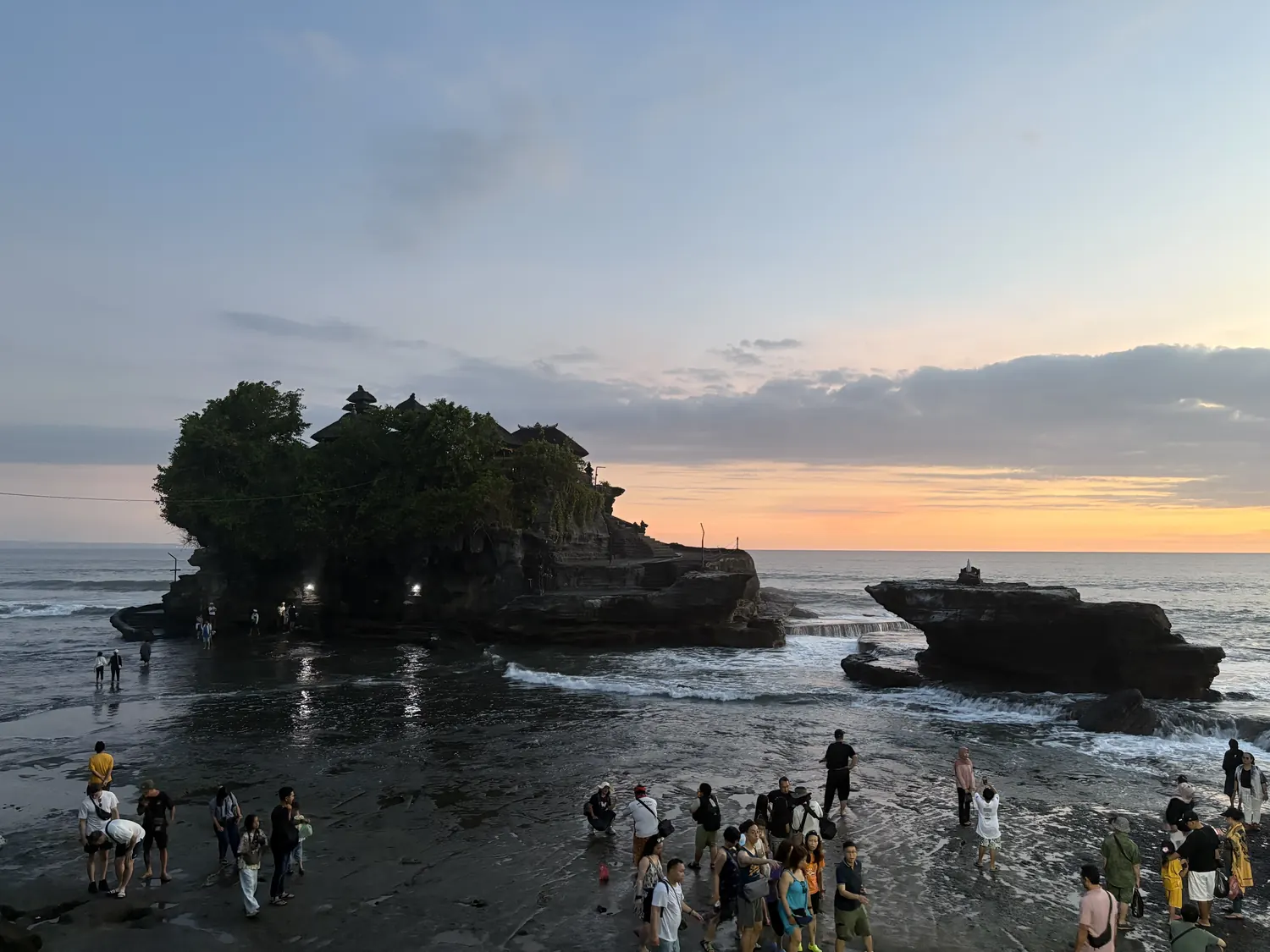
16th century
Tanah Lot is claimed to be the work of the religious figure Dang Hyang Nirartha, who allegedly spent a night there on his travels. He is still worshipped at the temple.
1634
The king of Mengwi builds the moated temple as a family temple honouring his ancestors.
1930s
The chanting chorus is reworked as a Ramayana dance-drama and starts to tour abroad.
1980s
A Japanese-funded programme stabilises the site, and over one-third of the rock you see today is disguised artificial rock.
2012
Taman Ayun joins the World Heritage List on 6 July as one of five sites in the subak cultural landscape. Tanah Lot is not among them.
Sources: English Wikipedia, Tanah Lot, Pura Taman Ayun, Kecak and Subak (irrigation).
Temple coast and inland Bali
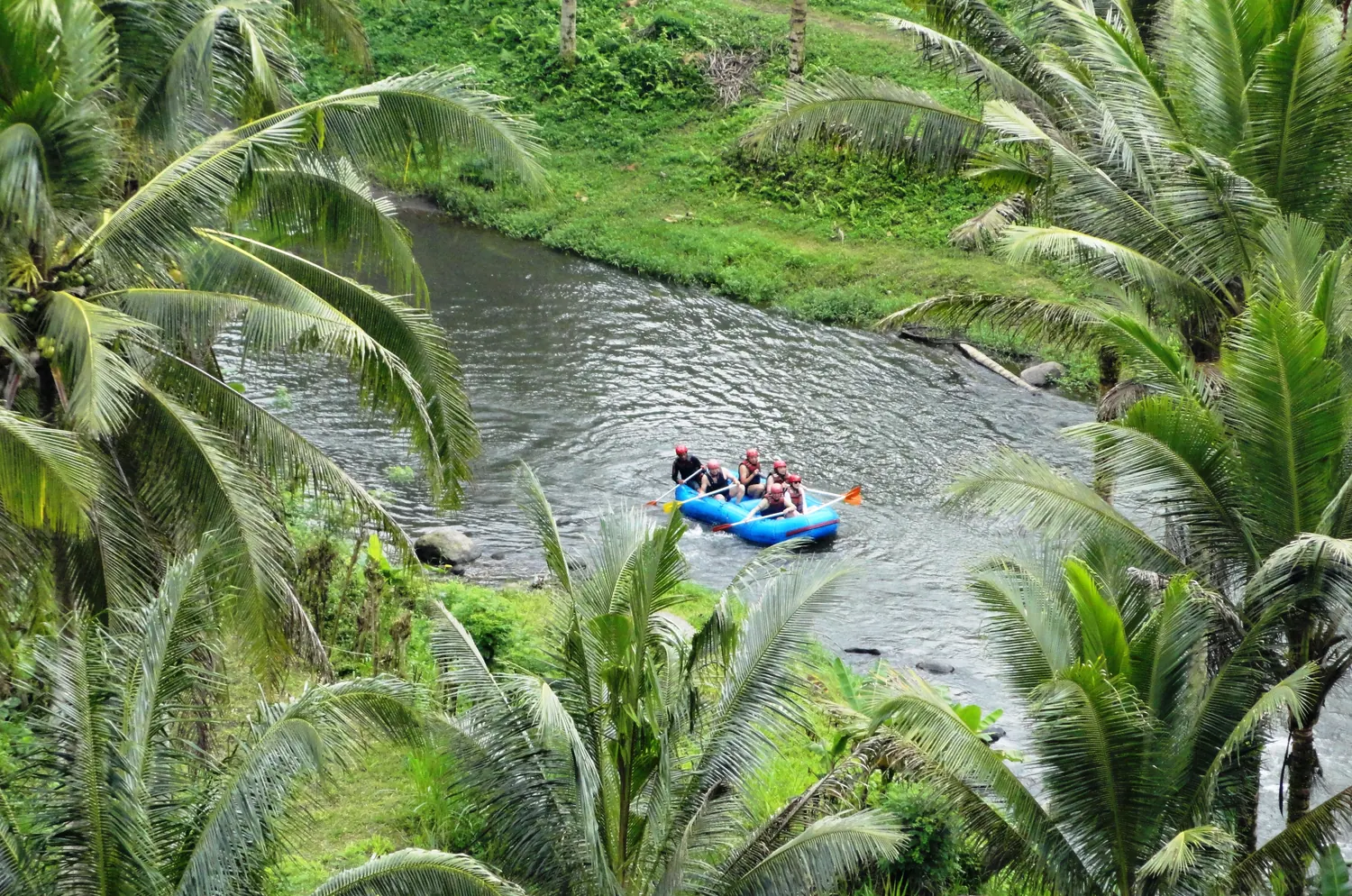
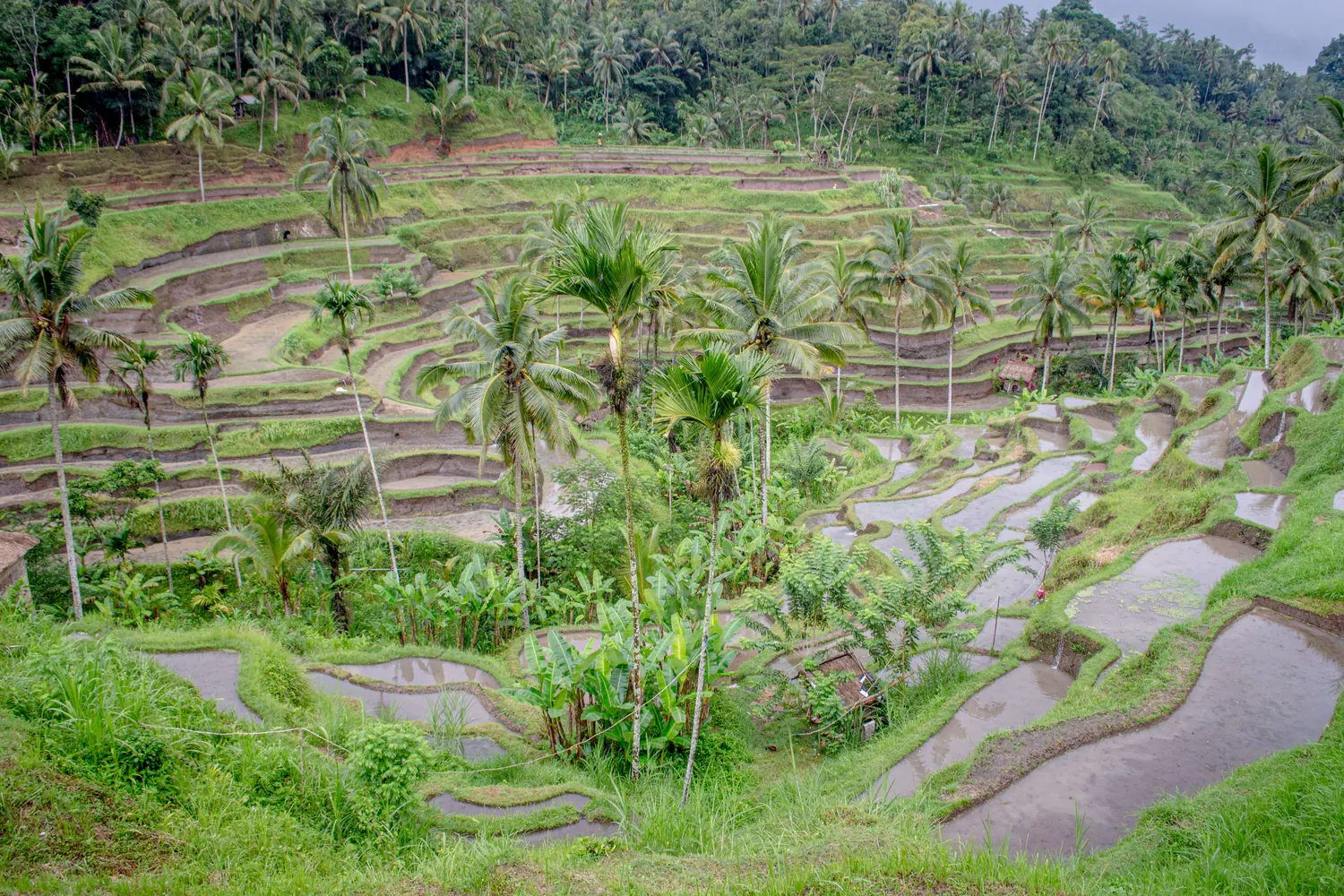
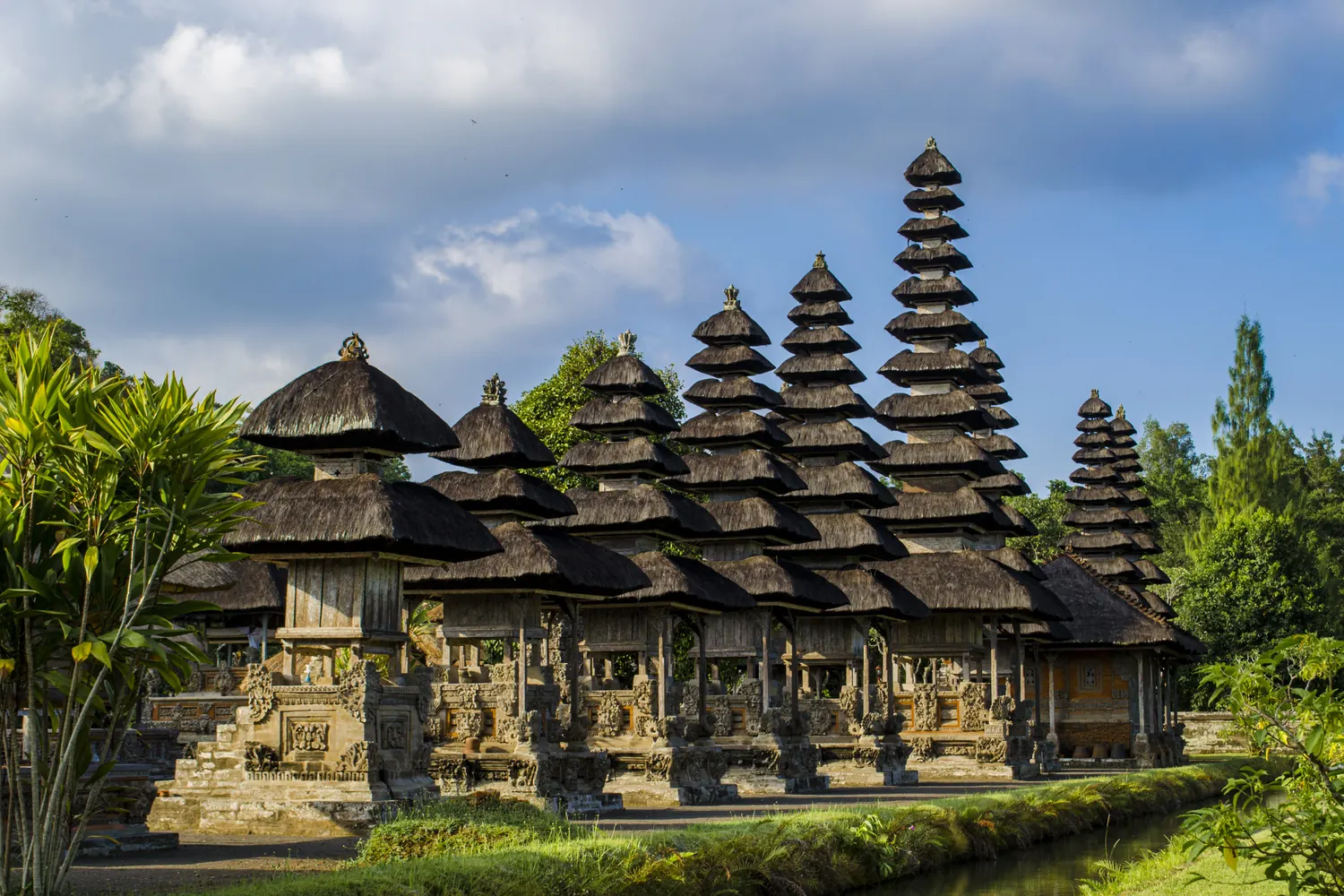
Three places inland that pair well with an evening on the coast: a river, a rice terrace and the moated temple on some ticket options.
Go deeper before you book
FAQ
For most first-time visitors, yes, if the evening is about the chant and the coast together. It is a short, low-effort outing with a reserved seat. Skip it if you want a guaranteed sunset, a ritual rather than a staged show, or a roof over your head.
Everything except your seat. The seat-only option has no temple entry ticket, no transfer, no temple tour and no Taman Ayun. Those come only on the fuller options, shown on the booking screen.
Not on the seat-only option. The temple's own entry ticket is bought separately, or you can choose an option that includes it. Budget for it before you compare options, because the stage sits within the temple area.
The show is outdoors, and rain is the recurring complaint from past visitors. Bring a light jacket or an umbrella. The free cancellation window shuts 24 hours ahead, so look at the forecast by then. For the day itself, contact the seller through your confirmation.
Not reliably. The show is timed for sunset and the coast faces the sea, but cloud can hide it, and nothing guarantees your seat a clear view of the rock. Treat a good sky as a bonus.
Not in this setting. English Wikipedia says kecak grew from a trance ritual and was popularised in the 1930s as a Ramayana drama for audiences. Sanghyang, its root, remains a sacred dance. This is a performance beside a sacred site, so be respectful, but it is not worship.
The show runs about an hour, and options with temples and transfer stretch the outing to as long as five hours. The start follows sunset, so your confirmation is the place to find the time. Check in at least 15 minutes before it.
By car or taxi to Tanah Lot in Beraban, then on foot past the stalls towards the temple. The stage is about 100 metres from the temple. Transfer is included on some options. Agree your ride home beforehand, because the show ends after dark.
Comfortable shoes and clothes, with something for rain. You are walking into the grounds of a Hindu pilgrimage temple, so keep shoulders and knees covered and give way to anyone there to pray.
Yes, with an adult beside them at all times. Babies under one are not suitable. The show involves fire and loud, sustained chanting, so think about how your child handles both.
Choose by how much effort you want. The show asks you to sit down for an hour at dusk; the Batur hike is a steep guided climb in the early hours, with a suggested minimum age of 18. Our second guide compares them in full.
No. You are reading an independent guide. The temple, the stage and the ticket seller do not run it, and it has no affiliation with those three. If you book from these pages, your booking goes through GetYourGuide.