The day
Taman Ayun and a day around the show
Why some options add Taman Ayun, what this moated World Heritage temple is, and how to fill the day before your evening at the Tanah Lot stage.
Pick a sunset show date ↗Quick answer
Some options add Pura Taman Ayun, a moated temple in Mengwi built in 1634 and listed by UNESCO in 2012 as part of Bali's subak landscape. It suits you if you want a full afternoon arranged rather than a single show. If you prefer to plan your own day, Ubud, a morning on the Ayung River and the rice terraces can all come before or after, though not all in one go. Keep the evening at the stage as the fixed point.
What Taman Ayun is
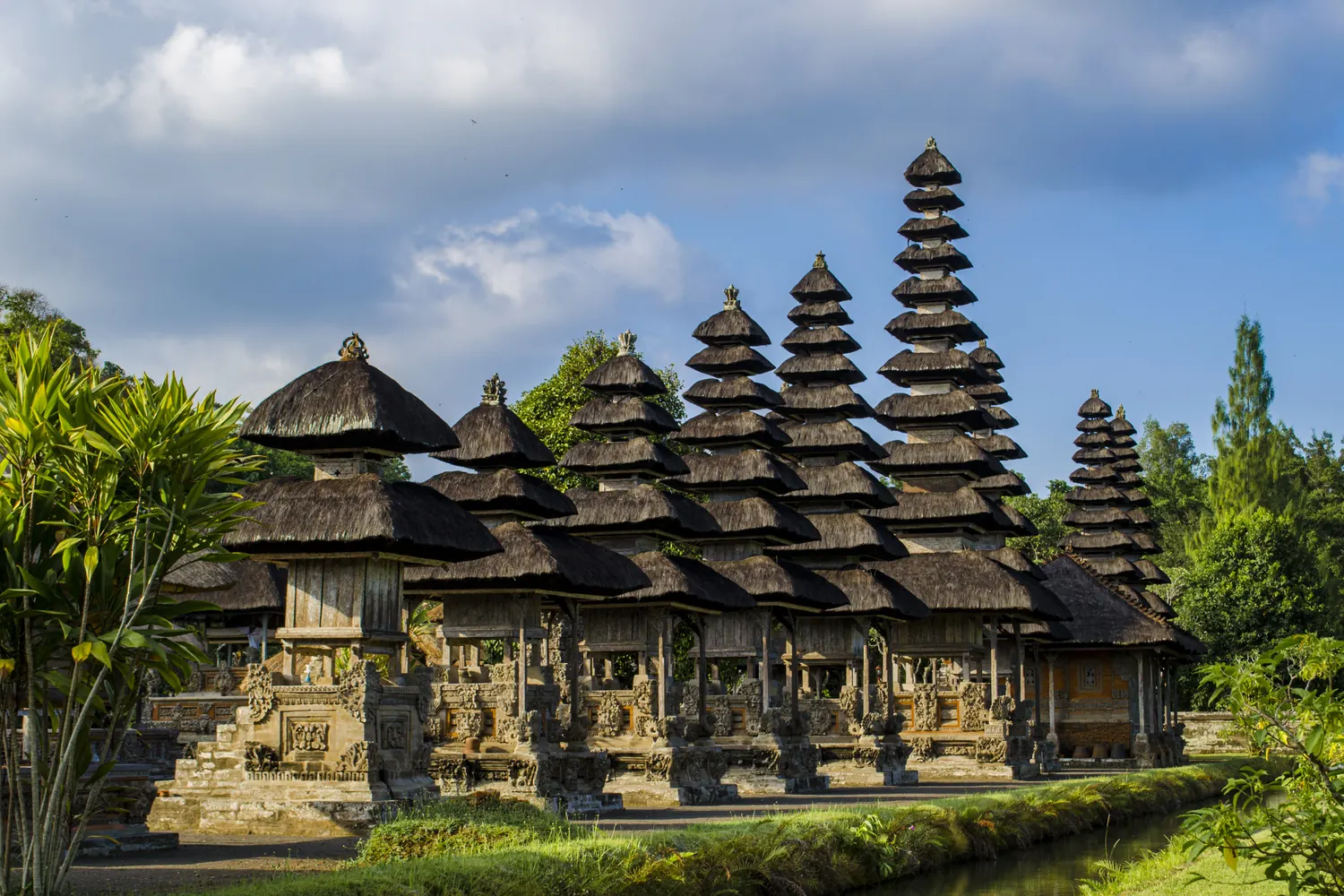
Pura Taman Ayun is a compound of Balinese temple and garden in Mengwi, in Badung Regency, about 19 kilometres north of Denpasar on Wikipedia's figure. The name means beautiful garden. A large body of water surrounds it on three sides like a moat, and you enter by a bridge on the south. It has the three courtyards common to holy temples, separated by split gates. The inner sanctuary, with shrines rising to eleven tiers, is reserved for worshippers, so you look in from outside it.
Built by a king
Wikipedia says Taman Ayun was built in 1634 by the king of Mengwi, Gusti Agung Putu, as a family temple honouring the spirits of his ancestors. Hindu gods are venerated here along with the ancestors of the Mengwi dynasty. It has been restored several times over the centuries, with the last major renovation in 1937. So it is older than the show you are going to see by about three centuries, and it carries a very different weight. It's a temple you visit for its architecture and calm, not for any spectacle.
Why UNESCO cares about the water
The water is not only for decoration. Taman Ayun's moat and fountains are part of the local irrigation system known as subak, which Wikipedia says started in the 9th century and is managed through water temples. On 6 July 2012, UNESCO listed the Cultural Landscape of Bali Province, with the subak system as a manifestation of the Tri Hita Karana philosophy, and Taman Ayun is one of its five sites. Tanah Lot itself isn't part of that listing, whatever a brochure may imply, though Tabanan is known for subak too.
When the option makes sense
Some ticket options add Taman Ayun with its entry ticket, as a stop before the stage, and that is one reason the outing can run as long as five hours. Choose it if you have no other plans for the day and want transport, two temples and a show handled together. Skip it if you already have a driver or a busy morning. The seat-only line with your own temple ticket is the lighter plan. Read the option lines carefully, because each one bundles a slightly different set of extras.
Read next: Tanah Lot kecak: is it worth it?
A morning on the river
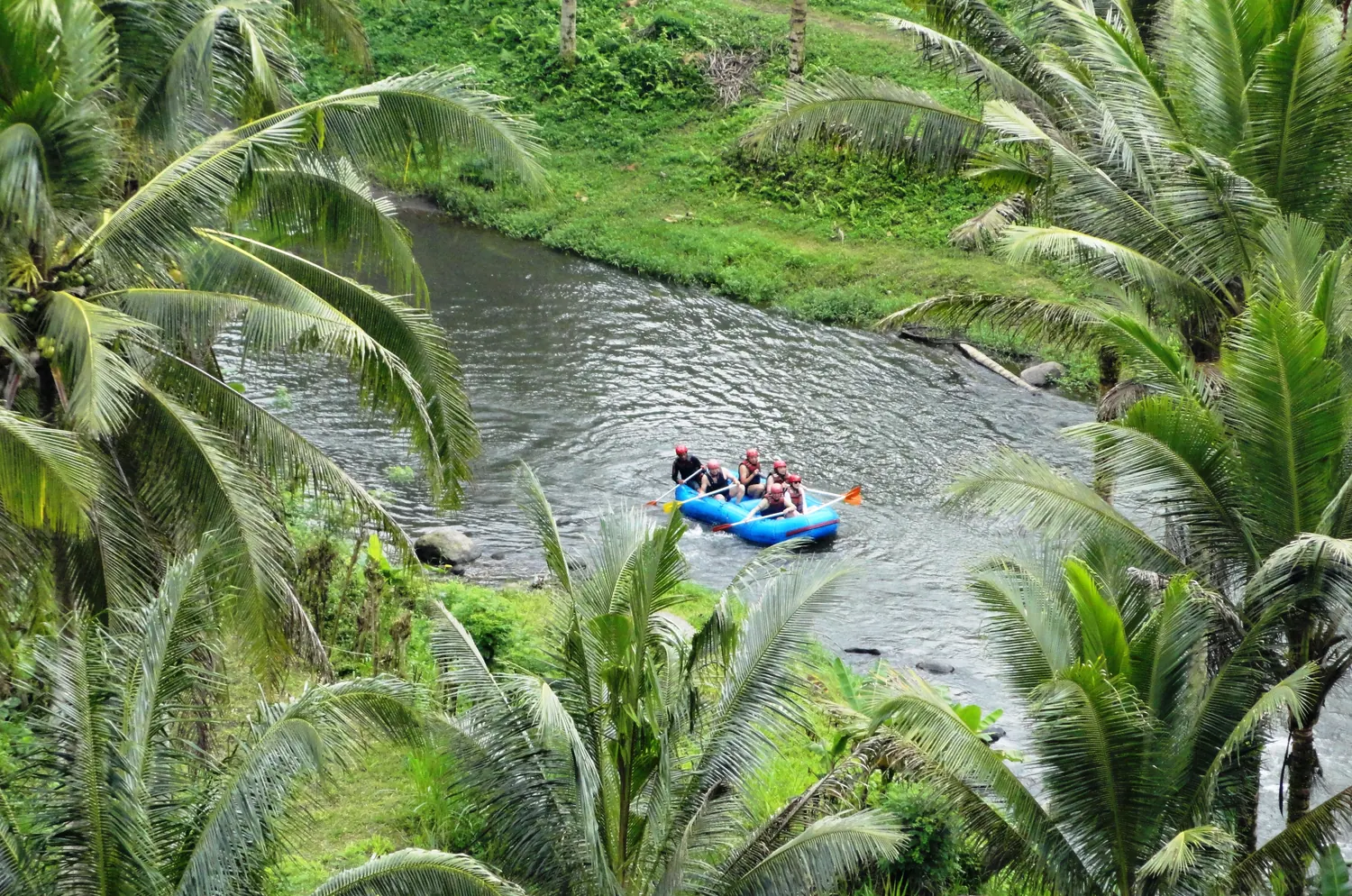
If you want something physical in the morning without a pre-dawn start, the Ayung River rafting trip is the classic choice. It runs class 2 rapids that can rise to class 4 in the rainy season, passes stone carvings on the way, and ends with a buffet lunch above the valley. It takes 2.5 to 5 hours depending on your option, and transfer is included on some options. Allow plenty of time before heading to the coast, since the river and the sea temple are not next door to each other.
A full day around Ubud
Ubud takes a day of its own. The full-day highlights tour on this site runs about eight hours by car with a licensed guide, taking in the Monkey Forest, the palace and art market, the rice terrace at Tegalalang, the holy spring at Tirta Empul and Tegenungan Waterfall. Wikipedia describes Tirta Empul as a water temple where Balinese Hindus go for ritual purification. This isn't something to squeeze in on the same day as the show. Give the stage its own late afternoon, or you will spend the sunset in traffic.
Rice terraces and the bigger picture
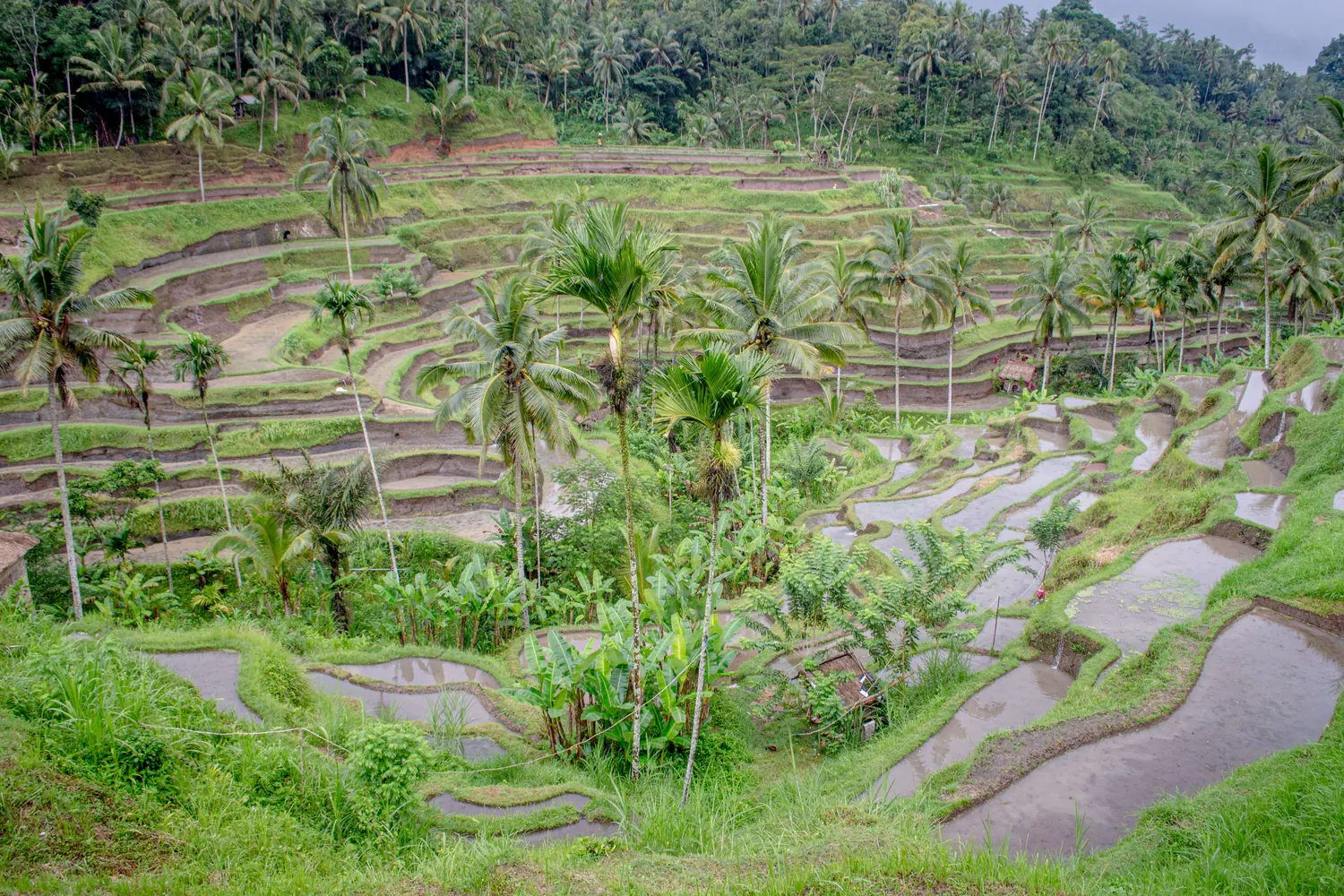
The terraces you see around Ubud are the living side of the same system that Taman Ayun's water feeds into. Wikipedia describes subak as a cooperative way of sharing water that binds farmers, canals and temples together. Seen this way, a temple visit and a rice terrace walk are the same story from two ends. Nothing about it is on the stage at Tanah Lot, where the Ramayana takes over. But it explains why water and temples turn up together wherever you go on the island.
A sensible shape for the day
Three plans work well. Plan one: a slow morning, the coast by mid-afternoon, the temple in daylight, then the show. Plan two: a fuller option with Taman Ayun and transfer, which removes the driving and the arranging. Plan three: the show as your last evening before a beach day, with Ubud and the river on other days. What doesn't work is a long inland day followed by a dash to the coast. The start of the show follows sunset, and it won't wait for your traffic.
Read next: Getting to Tanah Lot by road
Sources